
What is NeuroMovement®
NeuroMovement is a non-medical somatic learning approach. It’s based on a fundamental insight: movement is the language of the brain.
Every movement – whether a reach, a roll, or a subtle shift – sends information the brain needs to grow, adapt, and organize itself. Through movement, the brain learns to generate not only physical actions, but also thoughts, feelings, and purposeful behavior.
NeuroMovement was developed by Anat Baniel, a clinical psychologist and movement educator. Her approach emerged from decades of work with thousands of clients and her extensive training with Dr. Moshe Feldenkrais, the pioneering physicist and educator who first demonstrated how movement could transform brain function.
How NeuroMovement Works
NeuroMovement works by enhancing brain plasticity—the brain’s remarkable ability to form new neural connections and reorganize itself throughout life.
This capacity for change doesn’t diminish with age. It means the brain can always improve, regardless of a person’s current challenges or how long those challenges have existed.
By providing the brain with rich, differentiated sensory-motor information, NeuroMovement helps it discover better ways to organize movement, thinking, and feeling.
How NeuroMovement Helps Children With Special Needs
NeuroMovement helps children with:
- Autism spectrum conditions (ASD)
- Learning differences
- Cerebral palsy
- Traumatic brain injury
- Developmental delays due to genetic conditions
Understanding typical development
From birth, children explore their world through movement and sensation. Watch a typical infant: when awake, they’re almost constantly in motion. Their early movements are random and shaped by primitive reflexes, but over time, these movements become integrated into deliberate skills.
As babies experience themselves moving against gravity, their brains receive critical sensory feedback. This information allows them to form increasingly refined movement patterns—rolling, sitting, crawling, standing, walking, and eventually talking.
Gross motor development creates the foundation for everything that follows: fine motor skills, language, emotional expression, and executive functions like planning and problem-solving.
When development takes a different path
Children with special needs often cannot generate the wide variety of movements their brains require for typical development. Without this movement diversity, complex motor functions—and the cognitive and emotional capacities built upon them—cannot fully develop.
Our approach
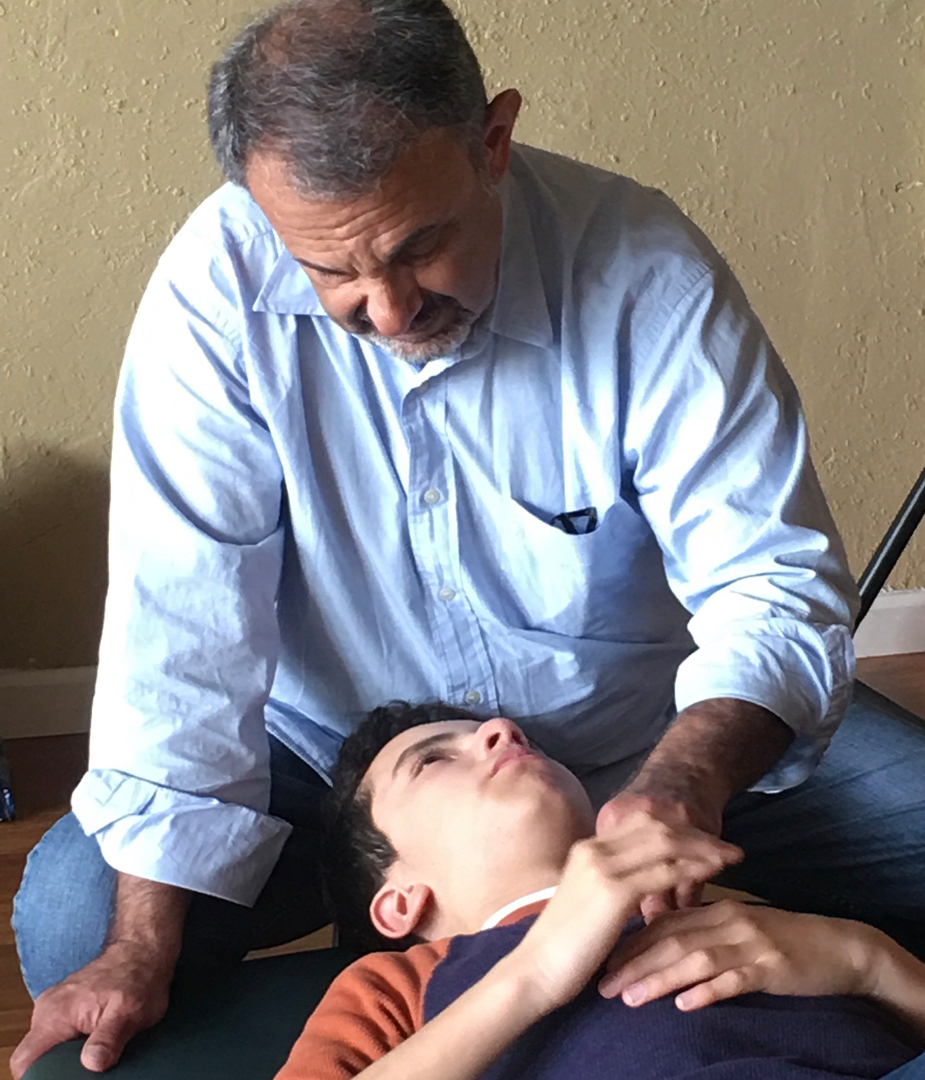
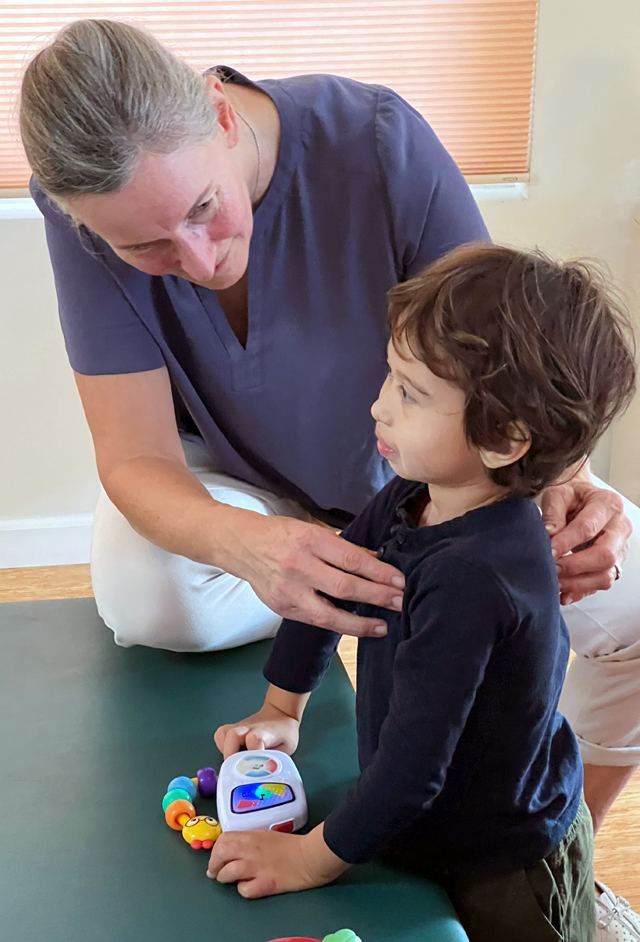
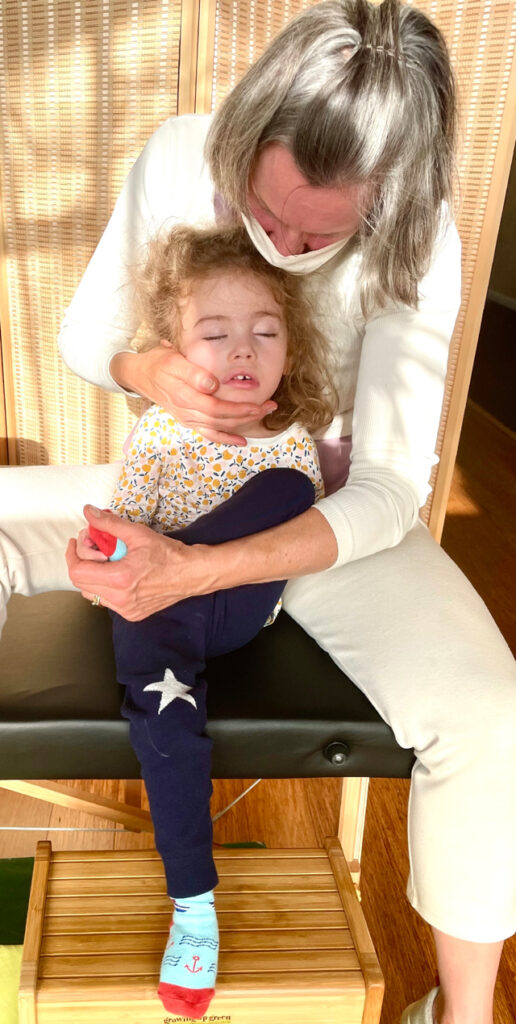
Our lessons provide children with sensory-motor experiences they cannot create on their own. We begin where each child is, offering focused presence, skilled touch, and clear communication as we explore new possibilities together.
Through slow, attentive movement, we highlight important connections throughout the child’s body, creating opportunities for them to feel themselves in new ways. This prompts the brain to form new neural pathways, expanding possibilities for refined movement, thinking, and emotional expression.
In this way, we engage in an open-ended conversation with the child’s nervous system—initiating a process of discovery, learning, and empowerment.
The Nine Essentials
The Nine Essentials are neuroplasticity principles that activate and enhance the brain’s ability to learn and change. These principles underpin several movement-based learning approaches, including the Feldenkrais Method®, the Anat Baniel Method®/NeuroMovement®, and NeuroHorizons® Experiential Movement®.
Anat Baniel distilled and expounded on these principles, naming them the Nine Essentials—the key conditions that drive brain plasticity. When present, they enable the brain to continually adapt, overcome limitations, and reach new levels of physical and cognitive performance.
The Nine Essentials are supported by current neuroscience research on brain plasticity: the brain’s lifelong ability to change, grow new connections, and reorganize itself.
These principles provide concrete, practical guidelines for supporting your child’s development. When we create the conditions described by the Nine Essentials, we help the brain work brilliantly—allowing children to discover their own solutions to the challenges they face.